
Evil eye amulets have become quite the trend over the last few years and can be found everywhere. From restaurants, home décor, jewelry and even phone cases. The Evil Eye dates back about 5,000 years as early as the Upper Paleolithic Age and the superstition of protection has been passed down amongst Persians through generations from the days of Zoroastrianism.
The Evil Eye is the victim of curse on someone’s behalf; the curse can be in the form of a glare, praise, or compliment. Sounds intense! It also can be self-inflicted when you aren’t humble. The Evil Eye originates from jealousy and according to legends, the curse results in an illness, misfortune, or bad luck. It’s almost like you jinx someone either intentionally or unintentionally.
It’s safe to say that Persians are very superstitious and take the Evil Eye very seriously. No Persian wants to be on the receiving end of Cheshm Zadan or ‘struck in the eye’. Although modernly many Persians may use amulets for protection, traditionally, Persians have used Esphand to keep the Evil Eye away.
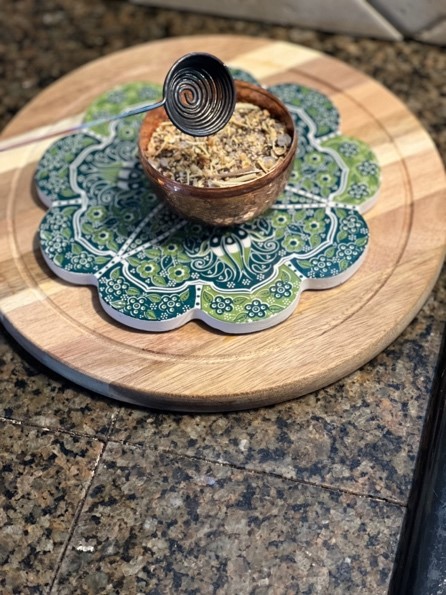
Esphand is wild rue seeds and can be burned with other seeds and roots to create different aromas or incense. It’s burned until there is a popping sound at which time the seeds release smoke – this smoke is circled around one’s head and home to keep the Evil Eye at bay. Ultimately, cleansing the space, protecting you and your family and prevent any bad omens.
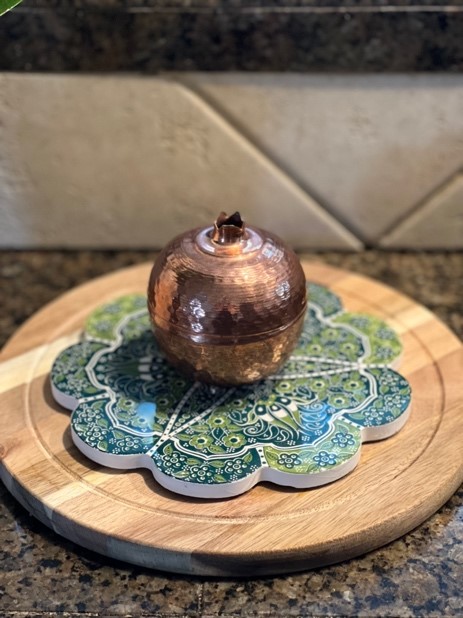
I like to keep my Esphand in a copper dish shaped like a Pomegranate that I picked up in Shiraz, Iran at Bazar Vakhil (more on that in another post). I keep the dish on my kitchen counter, I think it’s decorative and easy to reach for when I think of it.
Although these traditions of burning seeds or herbs (such as sage) to smoke out negativity or Evil Eye is not unique to many cultures, Esphand is unique to Persians.